
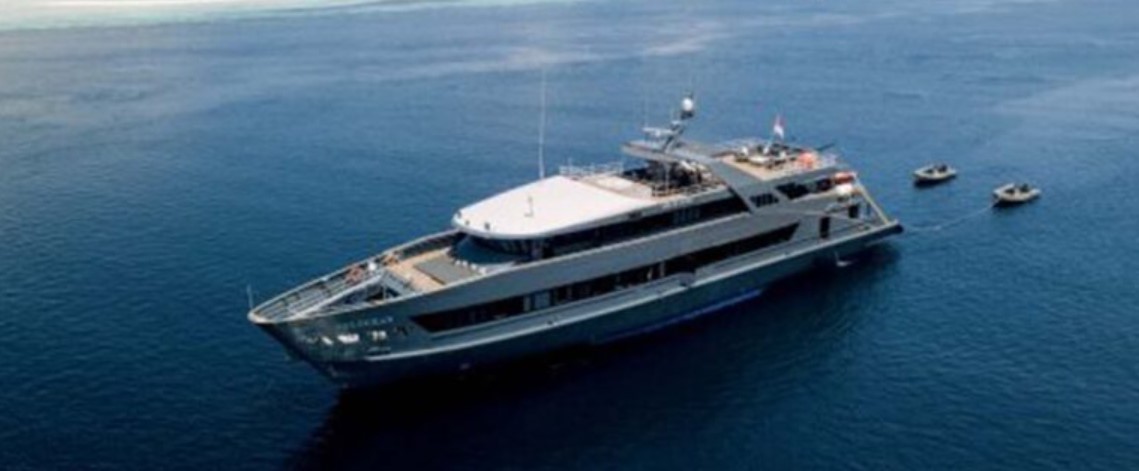
Every yacht looks finished at the dock. Sea trials exist because finished and proven are different claims, and the gap between them is exactly where new-build disputes live. A disciplined trials programme protects both parties: the owner gets evidence the vessel meets its contract, and the yard gets a signed record that it did. Here is how that programme runs on a metal yacht built in Indonesia.
Before the Bow Leaves the Dock
Trials begin stationary. Dock trials run every system against its commissioning sheet: engines under load on shore ties, generators stepping through their load bank, steering hard-over to hard-over on both pumps, bilge, fire and navigation systems exercised for the surveyor. The inclining experiment follows — weights shifted across the deck while pendulums measure heel — establishing the vessel’s true lightship weight and centre of gravity. On a classed build this is not optional theatre; the stability book that emerges is a flag-state document the yacht carries for life.
Dock trials are also the last calm moment to verify the paper trail: weld maps, coating records and the survey milestones accumulated through the hold points described in our article on class surveys during a steel build. Owners who cannot attend in person follow this stage remotely through the reporting rhythm covered in build oversight from abroad.
Measured Miles: Speed, Fuel and Vibration
At sea, the programme is progressive and instrumented. Speed runs are made on reciprocal headings to cancel current, at stepped engine loads up to maximum continuous rating, with fuel flow logged at each step — producing the real consumption curve that turns the range promises of the specification into verified numbers. Vibration is measured at the shaft line, engine mounts and accommodation spaces; a metal hull transmits structure-borne noise honestly, so mounts, couplings and alignment either work or are exposed within an hour.
Noise readings in cabins and on deck are taken at cruise and full power against the comfort targets in the specification. Where a number misses, the fix is usually specific — an exhaust resonance, a mount re-shim, a propeller adjusted — and the run is repeated until it passes. This is also where the machinery arrangement decisions made years earlier in the engine room layout pay their dividend: accessible machinery gets aligned, adjusted and fixed in hours rather than days.
Trim, Steering and the Sailing Case
Trim is read with calibrated draft marks and the tank gauges proven during construction: the vessel must float on her designed lines with tanks at the survey condition, and list must be within class tolerance. Steering trials measure turning circles, zig-zag response and autopilot behaviour; anchoring trials prove the windlass against its rated chain and depth. On sailing builds, trials extend to a genuine sailing programme — rig tune under load, furling behaviour, heeled engine running — the acceptance logic our sloop rig article argues should include a real offshore leg.
Every reading lands in the sea trial report signed by yard, owner’s representative and surveyor. Defects found become a punch list with agreed deadlines; the vessel is accepted when the list closes, which protects the delivery date honesty of the whole build timeline and gives the owner a baseline file every future survey will reference. The materials themselves shape what trials look for — the resonance and damping differences between steel, aluminium and FRP are summarised in our materials comparison.
Frequently Asked Questions
How long do sea trials take on a new metal yacht?
Typically 4–8 weeks from first dock trials to signed acceptance, including the inclining experiment, progressive sea runs and time to correct and re-test any misses. Complex expedition or sailing specifications sit at the longer end; the schedule is published in the build programme, not improvised.
What vibration and noise levels are acceptable?
The specification sets numeric targets per space — commonly 55–65 dB(A) in accommodation at cruise on motor yachts — and trials verify them with calibrated meters. Class rules govern machinery vibration limits separately. The honest practice is written targets before launch, not adjectives after it.
Can I attend sea trials myself?
Yes, and we encourage it — owners or their representatives are aboard for the principal runs, and remote owners receive the full instrumented record. Acceptance signature follows the closed punch list, so attending trials is the single best-value week an owner can spend on the project.
What happens if the yacht misses a contract number?
The miss is diagnosed, corrected and the trial repeated — propeller pitch, mount alignment and exhaust tuning resolve most speed, vibration and noise shortfalls. The contract’s acceptance mechanism governs anything unresolvable, which is precisely why measured trials witnessed by class exist.
Numbers Before Champagne
Ask any yard you are comparing for a redacted sea-trial report from a delivered vessel — the answer tells you how they define finished. Ours come from the same discipline our parent group’s boat construction division applies to every hull it delivers. WhatsApp +62 811-3941-4563 or email [email protected].