Build yards: Tanjung Benoa · Bali  &  Lamongan · East Java, Indonesia WhatsApp +62 811-3941-4563 [email protected]
Start a Build

Material selection

Yacht Building Materials: Steel vs Aluminium vs FRP

Material choice is the first real decision in any new-build project — it fixes the vessel’s weight, range, maintenance profile, resale market and a large share of its price before a single frame is cut. This guide compares the three materials as they are actually built in Indonesian yards, with the trade-offs stated plainly.

15–60 m BV · RINA 12–36 mo
In Brief

Steel, aluminium and fiberglass (FRP) are the three modern materials used for custom yacht building in Indonesia. Steel offers maximum strength and repairability for expedition yachts above 24 metres; aluminium is 40–50% lighter, faster and corrosion-resistant for 15–35 metre cruisers; FRP is the most cost-efficient and lowest-maintenance choice for semi-custom vessels under 30 metres. Indonesia Yacht Builder constructs in all three at classed yards in Bali and East Java. For a material recommendation matched to your mission, message +62 811-3941-4563 on WhatsApp or email [email protected].

Steel · 24–60+ m Aluminium · 15–35 m FRP · under 30 m

01 — Comparison at a glance

Three materials, side by side

The trade-offs stated plainly — as they are actually built in Indonesian yards.

Three materials, side by side
CriterionSteelAluminiumFRP (Fiberglass)
Best size band24–60+ m15–35 mUnder 30 m
Relative structure weightHeaviest40–50% lighter than steelLightest at small sizes
Strength & impact toleranceHighest; grounding-tolerantHigh; dents rather than cracksGood; point-impact is the weakness
CorrosionNeeds coatings + anodesNo rust; manage galvanic isolationImmune; osmosis barrier required
Maintenance burdenHighestModerateLowest
Typical build time24–36 months18–30 months12–20 months
Repair availability worldwideAny commercial yardAlloy-capable yardsComposite shops
Ideal missionOcean expedition, long-range liveaboardFast cruising, shallow draft, dive supportSemi-custom cruising, charter fleets

02 — Material by material

What each material actually buys you

Steel: Maximum Strength, Maximum Range

Steel is the default material for serious expedition yachts. Its virtues are blunt: the highest impact tolerance of any hull material, predictable fatigue behavior under classification-society rules, and repairability at practically any commercial port on earth. A steel hull that touches a reef is ground, welded and repainted; the same event in composite is a structural investigation.

The cost of those virtues is weight and upkeep. Steel structure is the heaviest per metre, which limits speed and demands honest coating work — grit blasting to Sa 2.5, multi-coat epoxy systems, and disciplined anode rotation. Below roughly 24 metres the weight penalty overwhelms the benefits, which is why our steel program at Lamongan, East Java, concentrates on 30–60 metre expedition and liveaboard platforms. Plate is certified to Bureau Veritas or RINA requirements, every weld is mapped, and ultrasonic inspection records join the owner’s technical file. Owners planning trans-ocean routes, high-latitude cruising or heavy dive-support operations should start their thinking at steel and require a reason to leave it.

Aluminium: The Light-Alloy Middle Ground

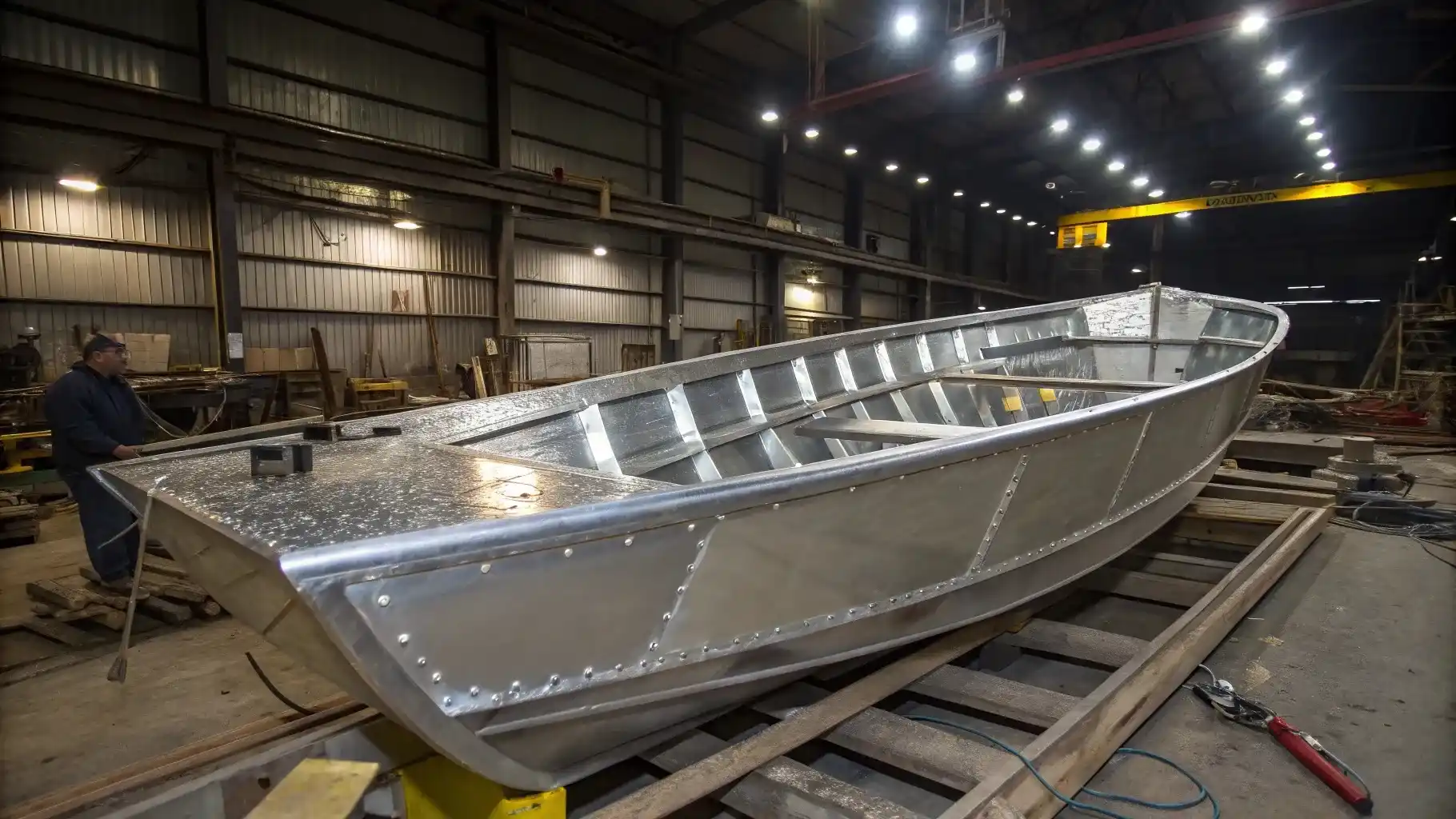
Marine aluminium — principally 5083 plate and 6061 extrusions — builds a hull 40–50% lighter than the equivalent steel structure. That weight saving compounds through the whole design: smaller engines reach the same speed, tankage buys more range per litre, and draft shrinks enough to open reef passages and river estuaries that displacement steel cannot enter safely.

Aluminium does not rust. Its corrosion risk is galvanic: dissimilar metals in contact, stray current from shore power, or a bronze fitting bolted where it should never be. These are engineering-discipline problems, solved at the drawing stage with isolation details and a correct anode plan — not ongoing burdens for the owner. The fabrication challenge is distortion: thin alloy plate moves under welding heat, and a fair hull depends on sequenced welding plans executed by certified TIG and pulsed-MIG welders. This is precisely the discipline our Tanjung Benoa, Bali, alloy bay is organized around. Expect an aluminium build to price 10–20% above steel per tonne of structure and to recover that premium in fuel and maintenance within a 10-year ownership cycle. The sweet spot: fast cruisers, dive and crew tenders, and sport-utility yachts from 15 to 35 metres.

FRP: Efficiency, Repeatability, Low Maintenance

Fiberglass-reinforced plastic dominates world yacht production under 30 metres for one reason: economics. Molded construction is fast, geometrically consistent and immune to corrosion. An FRP owner’s maintenance list is the shortest of the three materials — antifoul, polish, and periodic inspection of through-hulls. There is no plate audit, no coating cycle, no anode ledger.

Built correctly, modern FRP is a fully classed, ocean-capable material. Our laminates use vinylester barrier coats against osmosis, cored deck structures for stiffness without weight, and resin-infusion where the geometry rewards it. The material’s honest limits: point-impact resistance is lower than metal, one-off tooling above 30 metres rarely makes financial sense, and structural repairs need composite-capable shops rather than any harbor welder. FRP is the right answer for semi-custom cruisers, day-charter vessels and owner-operated liveaboards in the 18–26 metre band — and it is the fastest route to the water, with builds completing in 12–20 months. Charter operators standardizing a fleet gain twice: tooling amortizes across sister vessels, and crews maintain identical systems.

Choosing by Mission, Not by Fashion

The decision framework we apply in every design consultation:

  • Crossing oceans, high latitudes, remote expedition work: steel, 30 metres and up. Nothing else carries the range and shrugs off the contact.
  • Speed, shallow draft, reef and island work, dive support: aluminium, 15–35 metres. Pay the alloy premium, bank it back in fuel.
  • Semi-custom cruising or charter economics under 30 metres: FRP. Shortest build, lowest lifetime cost, cleanest maintenance profile.
  • Mixed demands: composite superstructure on a metal hull is a legitimate hybrid we engineer case by case.

03 — Owner questions

Frequently Asked Questions

The three questions owners ask first when choosing a hull material.

Which material has the lowest build cost in Indonesia?

For vessels under 30 metres, FRP delivers the lowest build cost and the shortest timeline. Above 30 metres, steel becomes the economical material because one-off composite tooling stops making financial sense.

How long does each material take to build?

FRP semi-customs complete in 12–20 months, aluminium builds in 18–30 months, and large steel expedition yachts in 24–36 months, measured from signed contract to handover.

Next step

Get a Material Recommendation

Send us your mission profile — cruising grounds, guest count, range target, private or charter — and we will reply with a recommended material, a realistic budget band and a delivery timeline. WhatsApp +62 811-3941-4563 or email [email protected].

WhatsApp the Build Desk Contact