Steel, aluminium & FRP yachts — engineered and built in Indonesia
Custom new builds from classed yards in Tanjung Benoa, Bali and Lamongan, East Java. Commissions from $800,000 for a compact 25-metre vessel to $12,000,000 for a 60-metre steel explorer — welded, laminated and surveyed to Bureau Veritas or RINA rules on 18–36 month timelines.
Every hull leaves with full weld mapping or laminate schedules, ultrasonic or barrier-coat inspection records, and a class technical file the owner keeps. The material changes; the documentation standard does not.
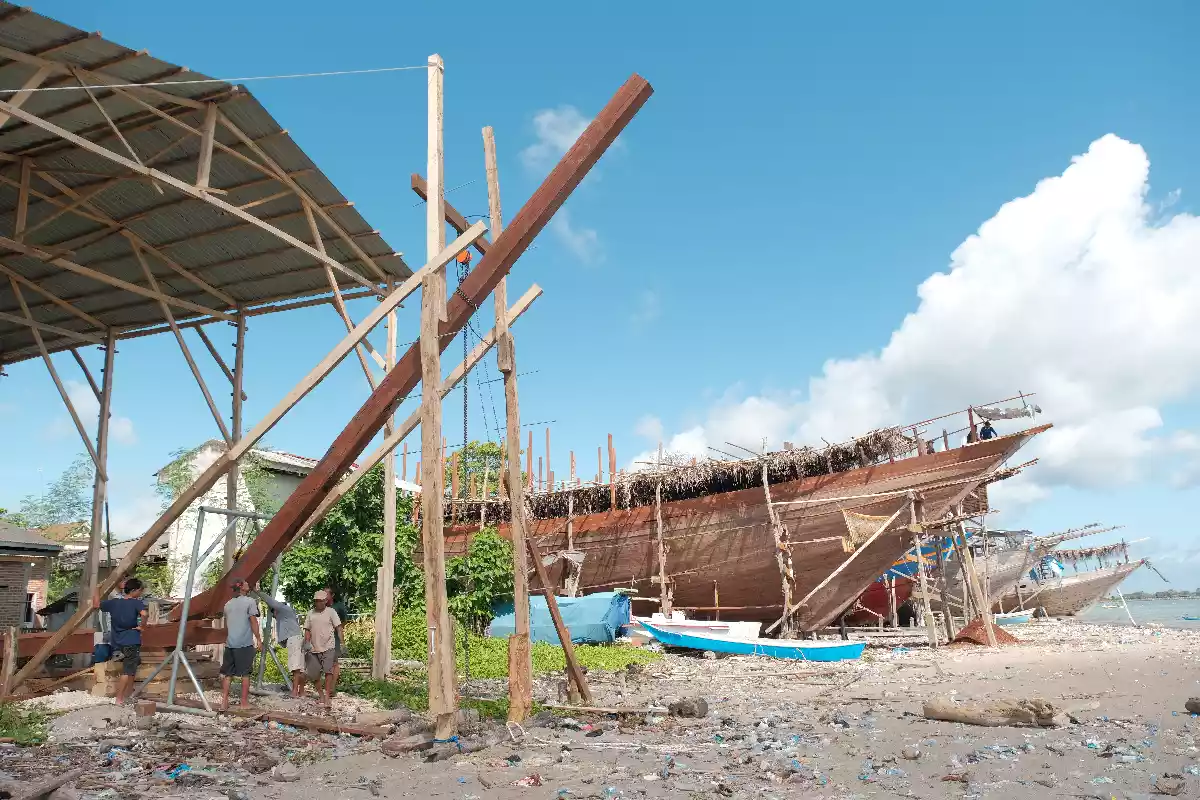
Lamongan yard
Steel
Plate to launch
Full-displacement strength for ocean crossings, remote anchorages and 3,000-nm legs. Marine-grade plate, sequenced welding, every seam mapped and ultrasonically inspected.
5083/6061 alloy hulls 40–50% lighter than steel — more speed on the same power, shallower draft for reef work. TIG and pulsed-MIG welding by certified welders with distortion-control plans.
The most cost-efficient route under 30 metres: molded geometry, vinylester osmosis barriers, cored decks — and the shortest build timeline of the three materials at 12–20 months.
Bring your own plans. We cut the kit and build the boat.
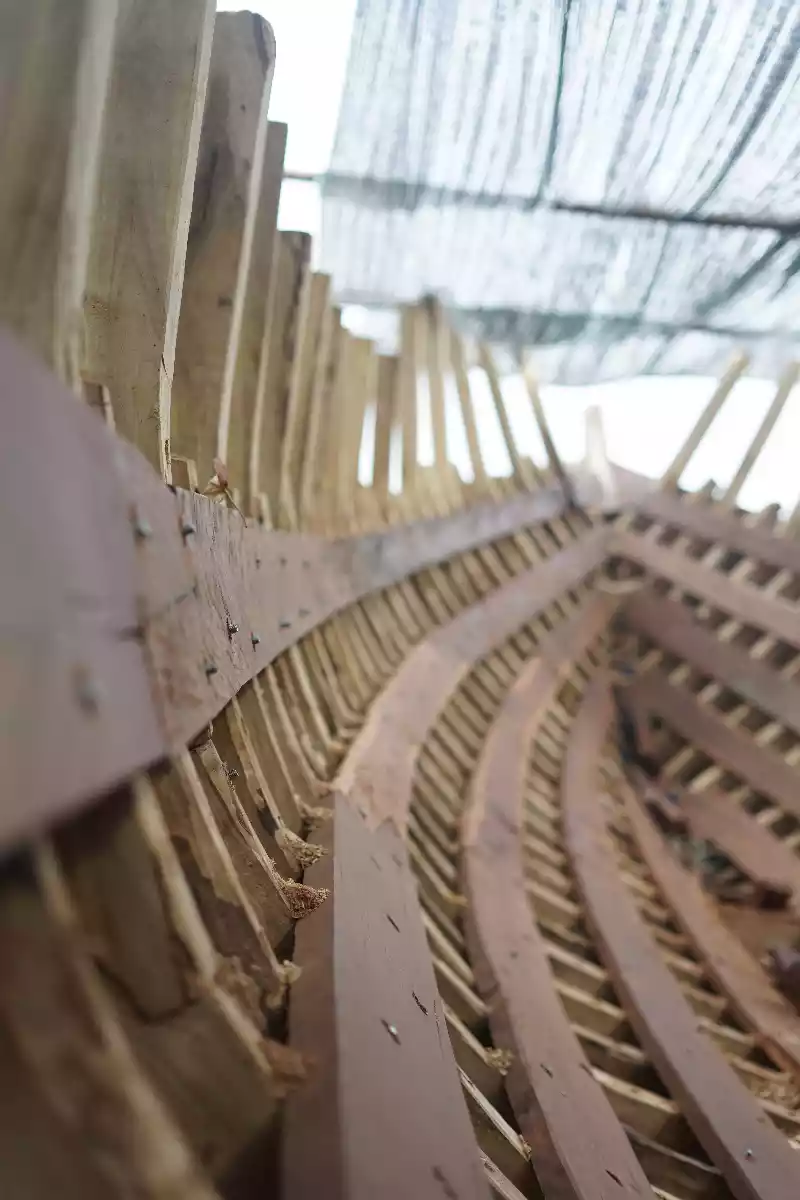
Frames and futtocks — Indonesian shipyard
A growing share of our commissions arrive with the naval architecture already chosen — a stock design or a custom lines plan from the owner’s architect. We take the cutting files, CNC-cut the full plate kit in steel or aluminium, and weld the hull under classification survey.
Cutting files nested and CNC-cut in-house — frames, stringers, plating
Designer’s build schedule followed plate-by-plate, with photo records
Class society hold points from keel laying through sea trials
Fixed milestone pricing agreed against the designer’s specification
The full journey from signed contract to delivery runs 18 to 36 months depending on size and complexity. A dedicated project manager coordinates naval architects, certified welders or laminators, and joinery teams throughout.
01
Design & naval architecture
Your mission profile — cruising grounds, guest count, range, crew model — becomes a general arrangement and a specification the yard can price honestly.
Spec freeze
02
Contract & classification
Build contract with milestone pricing; the hull is entered for survey under Bureau Veritas or RINA rules before the first plate is cut.
Class entry
03
Hull fabrication
CNC cutting, framing and welding — or tooling and lamination for FRP — with weld maps, ultrasonic inspection and surveyor visits at defined stages.
Keel & weld survey
04
Fit-out & systems
Propulsion, tankage, electrical to dual-voltage standards, interior joinery — documented with progress reports, photo records and scheduled owner site visits.
Systems sign-off
05
Launch, trials & handover
Launch, inclining test and sea trials, then handover with the complete technical file — insurable, financeable and saleable worldwide.
Class certificate
04 — Reference build programs
What owners commission, by the numbers
Representative configurations from our current programs — each is re-priced against the owner’s specification before contract. Detailed figures by length and fit-out level are maintained in the cost & pricing guide.
Fast coastal cruiserShallow-draft alloy, higher cruise speed
Aluminium
24 m
≈ 55 t
Built under class survey
20–26 mo
$2,400,000
Semi-custom cruiserMolded series hull, custom interior
FRP
22 m
≈ 48 t
Laminate log + survey
12–20 mo
$1,100,000
Owner-plan kit buildCNC-cut from your architect’s files
Steel / Alu
12–18 m
≈ 14–40 t
Optional class entry
14–22 mo
$800,000
Figures are indicative program baselines in USD, exclusive of owner-supplied equipment and delivery voyage. Displacement values are approximate at half load.
05 — Two yards, one standard
Bali fit-out finesse, East Java steel muscle
Fit-out & light alloy
Tanjung Benoa
Bali
Aluminium fabrication hall — TIG & pulsed-MIG, certified welders
FRP tooling, resin-infusion and lamination shop
Interior joinery, systems integration and final fit-out
Launch, inclining tests and sea-trial support in Benoa waters
Heavy plate & slipways
Lamongan
East Java
Steel plate shop with CNC cutting and full nesting capability
Slipways for hulls to 60 m LOA under class survey
Weld mapping, ultrasonic inspection and blasting/coating lines
Direct materials supply at globally traded plate prices
06 — Who stands behind the build
Contracted through PT Komodo Bahari Nusantara — part of Juara Holding Group
Indonesia Yacht Builder is the modern-material new-build desk of PT Komodo Bahari Nusantara, an Indonesian maritime company operating since 2015, within Juara Holding Group. Your contract, milestone payments and warranty sit with a registered Indonesian legal entity — not an intermediary — and owners commissioning for charter also receive guidance on Indonesian flag, survey and commercial certification so the vessel earns from its first season.
Classification survey
Hulls entered under Bureau Veritas or RINA rules with surveyor hold points from keel to trials.
Documented fabrication
Weld maps, ultrasonic reports and laminate logs delivered in the owner’s technical file.
Dedicated project manager
One accountable coordinator across architects, welders, laminators and joinery teams.
Charter-ready compliance
Indonesian flag, survey and commercial certification guidance for charter operators.
07 — Owner questions
Everything owners ask before the first plate is cut
Pick a topic — material choice, classification, cost, timeline or owner-supplied plans. Anything not answered here goes straight to the build desk on WhatsApp.
Which material has the lowest build cost in Indonesia?
For vessels under 30 metres, FRP delivers the lowest build cost and the shortest timeline. Above 30 metres, steel becomes the economical material because one-off composite tooling stops making financial sense.
What sizes of steel yacht can be built in Indonesia?
Our steel program covers 24 to 60+ metres, with the strongest economics between 30 and 60 metres. Below 24 metres steel’s structural weight penalizes performance, and we will usually recommend aluminium or FRP instead.
Is aluminium strong enough for ocean passages?
Yes. Classed aluminium yachts cross oceans routinely; the alloy dents where composite cracks and tolerates abuse far beyond its reputation. For sustained high-latitude or heavy expedition work, steel still leads on raw impact tolerance, which is why we build both and recommend by mission.
Is a fiberglass yacht built in Indonesia ocean-capable?
Yes, when built to a classed laminate schedule. Our FRP hulls carry Bureau Veritas or RINA certification with survey from laminate schedule approval through sea trials — the same instrument issued anywhere in the world, and the document insurers and buyers actually verify.
How do you prevent galvanic corrosion on an alloy hull?
By design: isolation of dissimilar metals, a bonding and earthing plan, galvanic isolators on shore power and a calculated anode schedule. The full corrosion plan is delivered in the owner’s manual, and correctly engineered alloy hulls run decades without electrolysis damage.
How do you prevent osmosis in tropical waters?
With a vinylester barrier coat system applied behind the gelcoat, verified resin ratios during lamination, and cure discipline in a controlled environment. Osmosis in modern, properly specified laminates is a solved problem — the failures that built its reputation came from polyester-only skins laid without barriers.
Do steel and aluminium yachts built in Indonesia carry international class?
Yes. Hulls are built under survey to Bureau Veritas or RINA rules, with classification-society inspections from keel laying through sea trials. The finished certificate is the same instrument issued at any yard worldwide, which keeps the vessel insurable, financeable and saleable internationally.
Is an Indonesian-built steel yacht accepted by international class societies?
Yes. Hulls are built under survey to Bureau Veritas or RINA rules from plate audit through sea trials. The certificate issued is the same instrument issued at any yard worldwide, which is what insurers, banks and future buyers actually check.
Are indonesia yacht builder yachts safe and certified?
Yes, all yachts from an indonesia yacht builder adhere to stringent international safety standards and certifications. We work with classification societies like Lloyd’s Register or DNV GL to ensure structural integrity, systems reliability, and seaworthiness. Our commitment to safety is paramount, from design to final delivery.
Can an owner-supplied design still be classed?
Yes — class societies survey the build, not the designer’s nationality. The structural schedule is reviewed against Bureau Veritas or RINA rules at the start, hold points run through the build exactly as on a yard-designed project, and the finished vessel carries standard certification.
How much does an indonesia yacht builder cost?
The cost of an indonesia yacht builder project varies significantly based on size, materials, and customization. A custom luxury yacht typically starts from $5 million USD for smaller vessels, with larger, highly bespoke builds ranging upwards of $20 million USD. We provide detailed quotes after an initial design consultation to match your specific requirements.
How much does a steel yacht build cost in Indonesia?
Realistic steel projects start around $2M and scale with length, machinery and interior fit-out. A detailed specification is the only honest basis for a number, and we provide an itemised budget band after reviewing your mission profile and drawings.
What does an aluminium yacht cost to build in Indonesia?
Expect 10–20% above an equivalent steel structure per tonne, inside our $800k–$12M program range. A 20–25 metre fast cruiser typically lands in the low-to-mid seven figures in USD depending on machinery and interior level; an itemised band follows a specification review.
What does an FRP build cost compared to steel or aluminium?
Under 30 metres, FRP delivers the lowest build cost and the shortest timeline of the three materials, sitting at the accessible end of our $800k–$12M program range. Above 30 metres the one-off tooling equation reverses and steel becomes the economical material.
What are indonesia yacht builder payment terms?
Our indonesia yacht builder payment terms typically involve an initial deposit of 10-20% upon contract signing. Subsequent payments are structured as milestone installments, usually 5-10% at key construction stages (e.g., hull completion, engine installation, interior fit-out). The final payment is due upon successful completion and delivery of your luxury yacht.
Indonesia yacht builder vs European builders?
An indonesia yacht builder offers distinct advantages over European builders, primarily combining exceptional craftsmanship with competitive pricing. Our skilled artisans excel in bespoke designs, often integrating unique local aesthetics and sustainable materials. This allows for significant cost savings, typically 15-30% lower, without compromising on luxury or international quality standards.
How long does indonesia yacht builder take?
Building a luxury yacht with an indonesia yacht builder generally takes 18 to 36 months. This timeline encompasses the entire process, including design, engineering, construction, and rigorous sea trials. Smaller, less complex projects might be completed in 12 months, while highly customized superyachts can extend beyond 48 months.
How long does each material take to build?
FRP semi-customs complete in 12–20 months, aluminium builds in 18–30 months, and large steel expedition yachts in 24–36 months, measured from signed contract to handover.
Best time to start indonesia yacht builder project?
The best time to initiate an indonesia yacht builder project is typically during the dry season, from May to September, for initial site visits and consultations. However, the design and planning phases can commence year-round. Construction timelines are managed internally to ensure consistent progress, regardless of external weather conditions.
How to book indonesia yacht builder consultation?
Booking a consultation with an indonesia yacht builder is straightforward. Simply visit our website and fill out the inquiry form, or contact us directly via email or phone. Our team will schedule an initial discussion to understand your vision, discuss design possibilities, and outline the bespoke building process for your luxury yacht.
Can you build from Bruce Roberts, Dix or Van de Stadt stock plans?
Yes. Stock designs from established naval architects are the cleanest packages we receive — proven hulls, complete scantlings and, in most cases, ready CNC cutting files. We verify your plan license, confirm the class notation target and quote against the actual file set.
Do I need my own CNC cutting files?
No. If your package is drawings only, we generate the nesting and cutting files from the scantling set through our engineering partners, with designer sign-off before cutting. Complete file packages simply shorten the path to first plate.
What does a kit build cost in Indonesia?
Materially less than the same hull fabricated in Europe or Australia, inside our $800k–$12M program range depending on size and outfit; a steel kit in the 12–15 metre class typically lands in the mid six figures USD fully outfitted. Send the drawings — quotations are built from your actual plate list, not from a generic rate table.
Can I customize my indonesia yacht builder design?
Absolutely, customization is at the heart of every indonesia yacht builder project. You can fully personalize your yacht’s layout, interior finishes, propulsion systems, and onboard amenities. From bespoke cabins to unique deck spaces, our design team collaborates closely with you to bring your exact vision for a luxury vessel to life.
What’s included with indonesia yacht builder services?
Our indonesia yacht builder services include comprehensive design and naval architecture, expert construction using premium materials, project management, and final sea trials. We also offer interior outfitting, systems integration, and full certification to international standards. Customization options for every aspect of your yacht are a core inclusion.
What size yachts does indonesia yacht builder build?
An indonesia yacht builder specializes in building luxury yachts ranging from 25 meters (80 feet) to over 60 meters (200 feet) in length. We cater to various group sizes and purposes, from intimate family cruisers to expansive superyachts designed for large gatherings and extended voyages, ensuring optimal space and comfort.
Tell us the mission. We will tell you the material, the timeline and the number.
Send a mission profile, a stock design or your architect’s cutting files — the build desk replies with a straight technical answer, usually within one working day.