- Aligns build start with the dry season (April-October) for superior timber curing.
- Accommodates the typical 12-18 month construction timeline for a custom Phinisi.
- Provides a crucial buffer for importing systems and luxury fittings.
The air in the boatyards of Tanah Beru, South Sulawesi, is thick with the scent of raw ironwood, clove cigarettes, and salt from the Flores Sea. You stand on a bed of wood shavings, the tropical sun warming your shoulders as the rhythmic thud of an adze shaping a 30-meter hull echoes around you. This is not a factory assembly line; it is a living tradition, a process where time itself is a critical material. Deciding when to this journey—when to commission an Indonesian yacht build—is the single most important decision you will make. It dictates not just the quality of the vessel but the entire experience, transforming it from a mere transaction into a deeply personal odyssey.
Deconstructing the Phinisi Build Timeline: More Than Just Wood and Sails
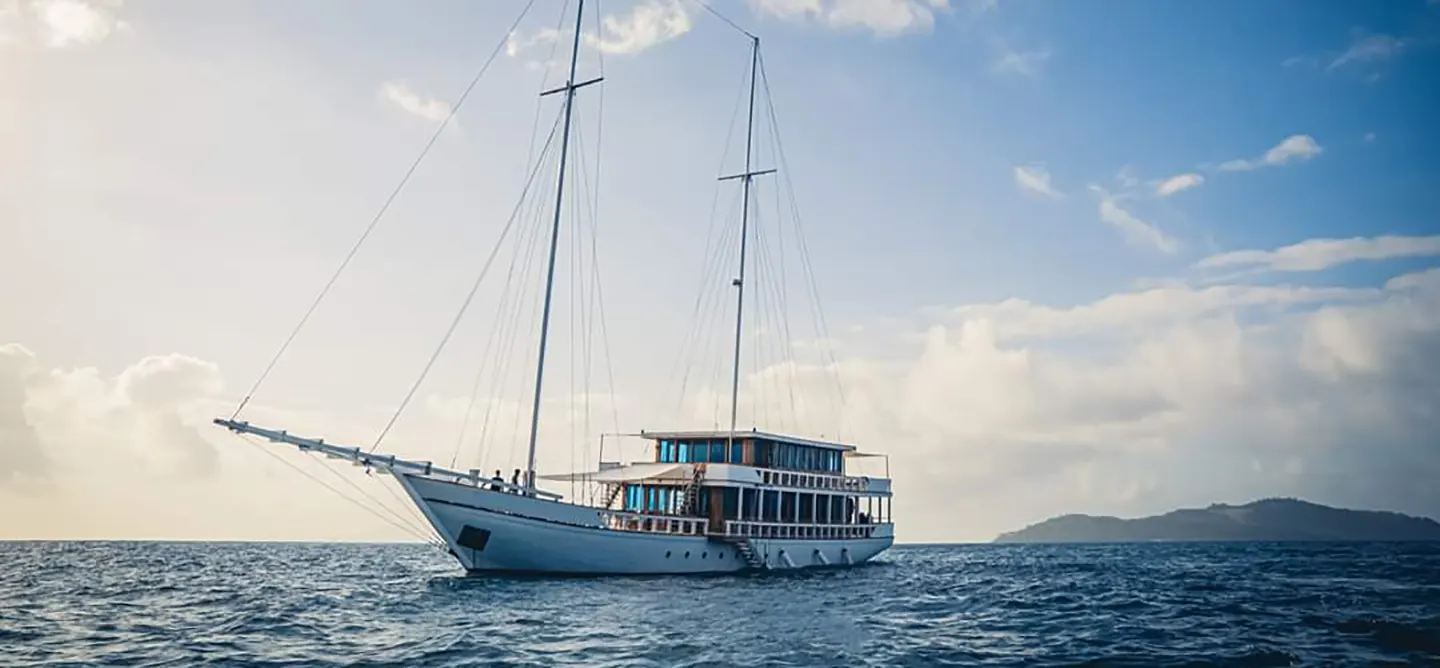
The first misconception to dispel is that a custom Phinisi schooner can be built on a whim. The process is a meticulous, multi-stage endeavor that honors centuries of maritime heritage. A typical 35 to 45-meter luxury Phinisi requires a minimum of 12 to 18 months from the first signed drawing to its maiden voyage, with more complex projects easily extending to 24 months. Understanding this timeline is fundamental. The initial design and consultation phase alone can take two to three months as you collaborate with naval architects and designers to translate your vision into technical blueprints. This is where every detail, from the number of guest cabins to the placement of the dive compressors, is decided. Following design finalization, the critical phase of material sourcing begins. Sourcing the highest-grade Ulin (ironwood) and teak from Kalimantan or Sulawesi can take another three to four months. A single 40-meter Phinisi might require over 200 cubic meters of timber, and the master builders insist on wood with a specific provenance and seasoning. Only then does the physical construction of the hull commence, a six-to-eight-month spectacle of pure craftsmanship. The interior finishing, a phase demanding a different set of artisans, takes another four to six months before the final two months are dedicated to systems installation, rigging, and rigorous sea trials. For a comprehensive overview of this entire process, The Definitive Indonesia Yacht Builder Guide offers an each stage.
The Rhythm of the Monsoons: Why the Dry Season is Your Starting Block
In Indonesia, everything moves to the rhythm of the monsoons. The archipelago, home to over 17,500 islands, experiences two distinct seasons: the dry season, typically from April to October, and the wet season from November to March. To commission an Indonesian yacht build effectively, you must align your project with this powerful climatic cycle. The dry season is your optimal starting block. “We work with the wind and the sun, not against them,” Bapak Eka, a master builder in Tanah Beru with three decades of experience, explained to me on a recent visit. “Starting the hull when the sun is strong and the air is dry gives the wood its soul and its strength.” Laying the keel and framing the hull during these months is critical. The lower humidity, often below 70%, allows the massive ironwood and teak timbers to season and settle correctly. Attempting this during the wet season, when humidity can exceed 85% and daily torrential downpours are common, risks trapping moisture within the wood, leading to warping, rot, and compromised structural integrity down the line. Furthermore, the relentless rain can bring all external work to a halt for days on end, creating costly delays. By initiating your commission in, say, May, you ensure the first six to eight months of crucial structural work occurs under the most favorable weather conditions, setting a foundation of quality that will last for decades. For more on the regional climate, the official indonesia.travel portal provides detailed seasonal information.
The Global Supply Chain: Timing Your Material and Systems Imports
While the soul of a Phinisi is born from Indonesian ironwood, its heart and mind are often sourced from around the globe. The engines, generators, navigation suites, water makers, and galley equipment that define a modern luxury vessel are not made in the boatyards of Sulawesi. This introduces the complex variable of the global supply chain. A pair of Caterpillar or Yanmar marine diesel engines, for instance, can have a lead time of six to twelve months from order to factory departure. High-end B&G or Furuno navigation systems, custom sail packages from Doyle or North Sails, and European-made interior fittings all operate on similar timelines. Once these items are shipped, they must navigate the Indonesian customs process, primarily through the ports of Jakarta or Surabaya. Port of Tanjung Priok in Jakarta handles over 50% of Indonesia’s international cargo, yet even for seasoned importers, clearing a container of marine equipment can add four to six weeks to the schedule. A savvy commissioner accounts for this logistical marathon from day one. By starting your build in the dry season (April-September), your design should be finalized by July. This allows you to place orders for all long-lead-time items immediately, targeting their arrival in Indonesia for the following spring, perfectly timed for the interior fit-out and engine room installation phase. Failing to anticipate these timelines is a common and costly error, leaving a perfectly crafted hull waiting months for its essential systems. The financial implications of these imported components are significant, a topic explored in our Indonesia Yacht Builder Pricing & Cost Guide.
Aligning with Cruising Seasons: Launching Your Yacht for Prime Exploration
Ultimately, you are commissioning a vessel to explore one of the most extraordinary marine environments on the planet. The timing of your build should therefore work backward from your ideal inaugural cruising season. Indonesia’s two premier yachting destinations operate on opposing schedules. The Komodo National Park and the Lesser Sunda Islands are best experienced during the dry season, from April to September, when the seas are calm and the skies are clear. To launch for this season, your yacht needs to be fully commissioned, trialed, and crewed by March at the latest. Conversely, the world-renowned waters of Raja Ampat in West Papua offer their best conditions from October to April, when the marine life is at its most prolific. To begin a charter season here, your vessel must be ready by September. Let’s map this out: for a Komodo launch in April 2026, you must commission your build no later than September 2024. This 18-month timeline allows for construction, trials, and the delivery voyage. The journey from a South Sulawesi shipyard to Labuan Bajo, the gateway to Komodo, is approximately 250 nautical miles. However, the delivery trip to Sorong for a Raja Ampat season is a more substantial 800-nautical-mile voyage, requiring a solid week at sea. Planning your commission with this end goal in mind ensures your investment begins generating returns—whether personal enjoyment or charter revenue—at the optimal moment. These regions, particularly Komodo National Park, are protected UNESCO World Heritage sites, and arriving in peak season is an experience without parallel.
The Human Element: Accessing the Master Craftsmen of South Sulawesi
When you commission a Phinisi, you are not merely hiring a company; you are becoming a patron to a lineage of artisans. The Bugis and Konjo people of South Sulawesi are the inheritors of an ancient boatbuilding tradition, a skill set so unique it was inscribed on the UNESCO list of Intangible Cultural Heritage of Humanity in 2017. Accessing the very best of these craftsmen—the most respected *tukang* or master builders—requires foresight. The top build teams are in high demand, often booked a year or more in advance. Jean-Pierre Lacombe, a maritime architect who has overseen more than a dozen Phinisi builds, puts it best: “You are reserving a specific team with a specific style. The difference between a good hull and a great one lies in the adze of the master builder. You wait for the best.” Furthermore, the work schedule is interwoven with cultural and religious life. Major holidays, especially the Eid al-Fitr (Lebaran) period that follows Ramadan, can see work cease for two to three weeks as workers return to their home villages. Factoring these cultural rhythms into your timeline is a sign of respect and a practical necessity. By planning 18-24 months out, you not only secure the A-team for your project but also build a schedule that accommodates these important breaks without causing stress or delays. This foresight is the key to a harmonious and successful build, and the first step is to book a consultation with an Indonesia Yacht Builder to understand current artisan availability.
Quick FAQ: Commissioning Your Indonesian Masterpiece
How long does the design phase actually take?
Expect a dedicated 2-4 months for a collaborative design process. This involves creating detailed architectural drawings, photorealistic 3D renderings, and comprehensive interior layouts. A top-tier indonesia yacht builder will engage naval architects and marine engineers to ensure the plans are not only beautiful but also structurally sound and seaworthy before a single piece of wood is cut.
Can I visit the build site during construction?
Absolutely, and it is highly encouraged. Most builders recommend at least three milestone visits: one for the traditional keel-laying ceremony, a second midway through the hull planking to appreciate the scale and craftsmanship, and a third during the interior fit-out. For ease of travel and to see the shipyard at its busiest, plan these visits during the dry season from April to October.
What is the biggest timing mistake future owners make?
The most common error is underestimating the pre-build phase, specifically the sourcing and seasoning of timber. Securing the right Ulin (ironwood) logs and allowing them to properly air-dry for 6-12 months is non-negotiable for a world-class hull. Attempting to rush this foundational step to meet an arbitrary deadline is a recipe for long-term structural issues.
Does the price change depending on when I commission?
While the cost of local labor and timber remains relatively stable, the prices for imported components like steel, engines, and electronics are subject to global market volatility. Commissioning your build 18 months or more in advance allows you to lock in pricing on these big-ticket items, hedging against inflation and supply chain disruptions. Our detailed cost guide examines how these variables impact the final budget.
Timing, then, is not about finding a convenient date on a calendar. It is a strategic decision that aligns the forces of nature, the complexities of global logistics, the availability of master artisans, and your own aspirations for exploration. To commission an Indonesian yacht build is to step into a process where patience is rewarded with quality and a vessel that is not merely built, but born. The journey of creation is as profound as the destinations the vessel will one day reach. When you are ready to begin mapping your own timeline and turning a vision into a tangible legacy, the experts at indonesia yacht builder are the definitive resource for navigating every stage of this extraordinary undertaking.