- October to April: The northwest monsoon brings calm seas and dry weather to the eastern archipelago, making it the prime season for Raja Ampat and West Papua.
- May to September: The southeast monsoon provides dry, sunny conditions ideal for exploring the central islands, including Komodo National Park, Flores, and the Lesser Sundas.
- Transitional Months: April/May and September/October are perfect for unique crossing voyages, such as exploring the historic Spice Islands.
The warm, clove-scented air drifts across the foredeck as the sun dips below the volcanic silhouette of Sangeang Api. You feel the gentle thrum of the engine, a quiet counterpoint to the rhythmic lapping of the Flores Sea against the ironwood hull. This is not merely a vacation; it is an immersion. Indonesia, an archipelago of more than 17,500 islands stretching over 5,100 kilometers, is not a single destination to be conquered in a week. It is a living, breathing entity governed by the ancient rhythm of the monsoons. To sail here, especially aboard a vessel crafted to your exact specifications, is to participate in that rhythm. Understanding this seasonal dance is the first and most critical step in unlocking the boundless potential of your custom indonesian yacht.
The Rhythm of the Monsoons: Understanding Indonesia’s Two Seasons
Before plotting a single coordinate, any seasoned mariner in this region consults the wind. The Indonesian archipelago is governed by two primary seasons, driven by the monsoon winds. Forget the simple Western concepts of four seasons; here, life revolves around the wet northwest monsoon (roughly October to April) and the dry southeast monsoon (May to September). This climatic duality is the master key to your itinerary. The sheer scale of the country means that while one region experiences heavy rains and rough seas, another, thousands of kilometers away, offers placid waters and cloudless skies. This phenomenon is largely dictated by the movement of the Inter-Tropical Convergence Zone (ITCZ), a belt of low pressure near the equator.
During the northern hemisphere’s winter, the northwest monsoon brings moisture from the Asian continent, delivering rain primarily to the southern parts of the archipelago like Java and Bali, while leaving the far eastern reaches, like Raja Ampat, remarkably dry and calm. Conversely, from May to September, the pattern reverses. The southeast monsoon brings dry air from the Australian continent, creating perfect sailing conditions through the heart of the nation—from Bali eastward through Komodo, Flores, and Alor. Aboard your custom indonesian yacht, this isn’t a limitation; it’s a magnificent opportunity. It means there is always a perfect place to be, a calm anchorage to discover, and a vibrant reef to explore. It simply requires intelligent, season-aware planning, the very kind of expertise a veteran indonesia yacht builder incorporates into their consultation process.
October – April: The Raja Ampat & West Papua Revelation
As Europe and North America descend into winter, the eastern edge of Indonesia awakens. This is the moment for Raja Ampat. The name translates to “The Four Kings,” for the four main islands of Misool, Salawati, Batanta, and Waigeo, but the title feels inadequate for a region of such majestic biodiversity. Located off the northwest tip of Bird’s Head Peninsula in West Papua, this area is widely considered the epicenter of marine life on Earth. Scientific surveys have confirmed that it harbors nearly 75% of the world’s known coral species and more than 1,600 species of fish. The northwest monsoon winds, which can make sailing in the south challenging, have the opposite effect here, calming the seas and creating exceptional water clarity, often exceeding 30 meters.
Your days are defined by underwater encounters. Imagine descending into the blue at Manta Sandy to witness a cleaning station for dozens of giant oceanic manta rays, or drifting through the channel at Arborek Jetty, a kaleidoscope of soft corals and schooling fish. Above the water, the landscape is equally compelling. Your yacht’s tender can navigate the labyrinthine limestone karsts of Wayag, leading to a short, steep climb for a view that has graced countless magazine covers. The value of a thoughtfully designed vessel becomes clear here. Accessing these remote sites requires a shallow draft, robust tenders, and a state-of-the-art dive setup—details meticulously planned during the creation of your custom indonesian yacht. Raja Ampat is usually described less by species count than by condition: it is one of the few places where a reef still looks the way a reef is supposed to look. We attribute that to no named individual, because we hold no documents that would support a claim about anyone’s experience.
May – September: The Classic Komodo & Lesser Sundas Voyage
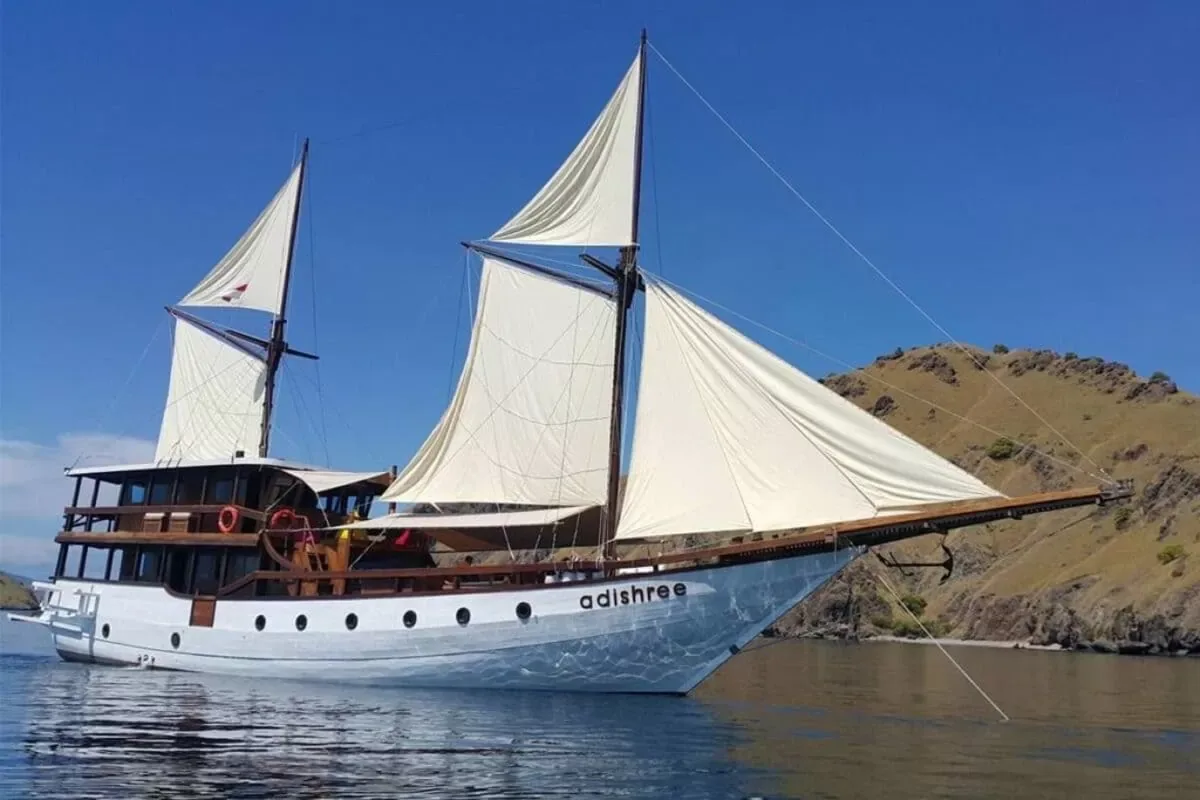
When the winds shift in May, so does our focus. The compass needle swings west toward the Lesser Sunda Islands, and the legendary Komodo National Park. This is Indonesia’s high season for a reason. The weather is sublime: dry, sun-drenched days with a steady southeasterly breeze that fills the sails of a traditional Phinisi. The landscape here is a stark and dramatic contrast to the lush jungles of West Papua. The islands are arid, almost prehistoric, with rolling savannah hills that bake to a golden brown under the equatorial sun. This dramatic topography plunges into a sea of brilliant turquoise, fringed by beaches of both white and pink sand, the latter getting its hue from crushed red organ-pipe coral.
The main attraction, of course, is the Komodo dragon (Varanus komodoensis), the world’s largest lizard. A guided trek with a park ranger on Rinca or Komodo Island is an essential experience, offering safe, up-close encounters with these formidable creatures, which can reach up to 3 meters in length. Yet, the dragons are only the beginning. The diving in Komodo is world-class, though more challenging than Raja Ampat due to the powerful currents that surge through the Sape and Linta Straits. Sites like Batu Bolong are a vortex of marine life, with staggering densities of anthias, fusiliers, and sharks. The advantage of a private yacht charter, detailed in The Definitive Indonesia Yacht Builder Guide, is the ability to time your dives perfectly with the slack tides, ensuring maximum safety and enjoyment. This season is also perfect for extending your voyage eastward to the volcanic islands of Flores and Alor, where ancient cultures and pristine reefs await.
The Shoulder Seasons: Unlocking the Spice Islands & Cenderawasih Bay
The transitional months—April, May, September, and October—are often overlooked, but for the discerning traveler, they present unique opportunities. These are the periods when the winds are variable, creating a window for long-distance “crossing” voyages between the major cruising grounds. The most alluring of these is a journey into the Banda Islands, the fabled Spice Islands of Maluku. For centuries, this tiny cluster of 11 volcanic islands was the only place on earth where nutmeg and mace grew, making them more valuable than gold and the focal point of brutal colonial rivalries. Sailing into the deep, caldera-like harbor of Banda Neira is like sailing back in time. You can explore crumbling Dutch forts, wander through verdant nutmeg plantations, and dive on reefs that have grown over ancient lava flows.
Another exceptional shoulder-season destination is Cenderawasih Bay in West Papua. While it is geographically close to Raja Ampat, its sheltered position gives it a unique microclimate. Its primary draw is one of the most remarkable wildlife interactions available anywhere: swimming with whale sharks. Unlike other global hotspots where encounters are seasonal and fleeting, the whale sharks in Cenderawasih Bay are year-round residents. They have developed a symbiotic relationship with the local fishermen, congregating around their floating fishing platforms, known as bagan, to feed on the small baitfish that slip from the nets. This allows for prolonged, respectful, and almost guaranteed interactions with the world’s largest fish. Planning an expedition of this nature involves significant logistical considerations, the costs of which are outlined in our Indonesia Yacht Builder Pricing & Cost Guide.
Crafting Your Itinerary: The Bespoke Advantage
This month-by-month guide should be seen as a framework, not a rigid set of rules. The ultimate luxury of commissioning or chartering a custom indonesian yacht is the freedom it affords. You are not beholden to a fixed schedule. A skilled captain and crew can read the subtle shifts in weather and adapt the itinerary on a daily basis. Did you fall in love with a particular anchorage? Stay another day. Did a fellow traveler mention a newly discovered dive site? Adjust your course. This level of flexibility is simply impossible on larger, more structured cruises. It is the very essence of modern exploration.
The journey is tailored entirely to your passions. For an avid diver, the yacht can be a floating five-star dive center, equipped with nitrox, rebreather support, and a marine biologist guide. For a family, the focus might be on calm coves for kayaking, cultural exchanges in remote villages, and beach barbecues under a canopy of stars. A wellness-focused charter could incorporate daily yoga on the deck, a private chef specializing in healthy cuisine, and spa treatments onboard. As the crews who have helmed phinisis for decades describe it, “The winds tell us where to go. A good captain listens. We don’t fight the sea; we dance with it.” This philosophy is at the heart of the bespoke yachting experience—a fluid, responsive dance between your desires and the boundless opportunities of the Indonesian archipelago.
Quick FAQ: Your Indonesian Yachting Questions Answered
What is the best single time of year to sail all of Indonesia?
There isn’t one. The archipelago’s immense size, spanning a distance comparable to Los Angeles to New York, means it’s governed by two opposing seasons. The best approach is to choose a region based on the time of year: the eastern archipelago (Raja Ampat) is best from October to April, while the central islands (Komodo, Flores) are ideal from May to September.
How long does a typical custom yacht charter last?
While week-long charters are common, we find that guests truly begin to unwind and immerse themselves in the experience on 10- to 14-day voyages. For those looking to traverse the major cruising grounds, such as a repositioning cruise from Raja Ampat to Komodo, a journey of a month or more is required to do it justice.
What is the marina infrastructure like?
High-end marina facilities are still developing across Indonesia. Most itineraries are expeditionary in nature, relying on the yacht’s self-sufficiency to anchor in secluded, pristine bays. Key logistical hubs with airports and basic port facilities include Labuan Bajo for Komodo, Sorong for Raja Ampat, and several locations in Bali. For a detailed consultation on these logistics, you can Book Indonesia Yacht Builder services.
How are permits and national park fees handled?
bureaucracy of cruising permits (known as the CAIT), harbor master clearances, and national park entrance fees is a complex but essential process. This is a critical service handled seamlessly by your yacht’s management company or a reputable charter agent, ensuring your voyage is smooth and compliant with all local regulations. You can find some high-level information on the official Indonesia Travel website, but on-the-ground expertise is invaluable.
The true journey of discovery in Indonesia begins long before you feel the sea spray on your face. It starts with a vision—a vision of a vessel perfectly attuned to the environment it will explore and the experiences you wish to create. It is a dialogue between your dreams and the art of shipbuilding. To begin crafting a vessel as unique as the archipelago itself, the first conversation should be with a premier indonesia yacht builder. Explore the possibilities and start your journey today.