Build yards: Tanjung Benoa · Bali  &  Lamongan · East Java, Indonesia WhatsApp +62 811-3941-4563 [email protected]
Start a Build

Lamongan · East Java

Steel Yacht Builder Indonesia — Plate to Launch

Steel is the material owners choose when the mission is measured in ocean crossings rather than day trips. This page explains how our steel program actually runs — from plate certificate to launch — and what a realistic steel build looks like in an Indonesian classed yard.

24–60+ m From $2,000,000 24–36 months BV · RINA survey
In Brief

Indonesia Yacht Builder is a steel yacht builder in Indonesia constructing classed vessels of 24–60+ metres at our Lamongan yard in East Java — expedition yachts, long-range liveaboards and support vessels built from certified plate under Bureau Veritas or RINA survey. Steel programs start around $2M and deliver in 24–36 months, with every hull grit-blasted to Sa 2.5, coated in a multi-layer epoxy system and handed over with a complete weld map and ultrasonic inspection file. To scope a steel project, message +62 811-3941-4563 on WhatsApp or email [email protected].

01 — The steel case

Why owners specify steel — and what it costs them

Why Steel Is Still the Expedition Standard

No other hull material tolerates the real world the way steel does. It has the highest impact resistance of any yacht-building material, fatigue behavior that classification societies have modelled for a century, and it can be repaired at practically any commercial port on the planet. A steel hull that finds a reef is ground back, re-welded and repainted; the same contact in composite construction becomes a structural investigation. For trans-ocean routes, remote-area cruising and heavy dive-support work, steel is the default answer — and the burden of proof sits with any alternative.

The honest costs are weight and coating discipline. Steel structure is the heaviest per metre of length, which caps speed and makes protective coatings a matter of engineering rather than cosmetics. Below roughly 24 metres the weight penalty overwhelms the advantages, which is why our steel program begins where steel makes sense.

The Lamongan Steel Program

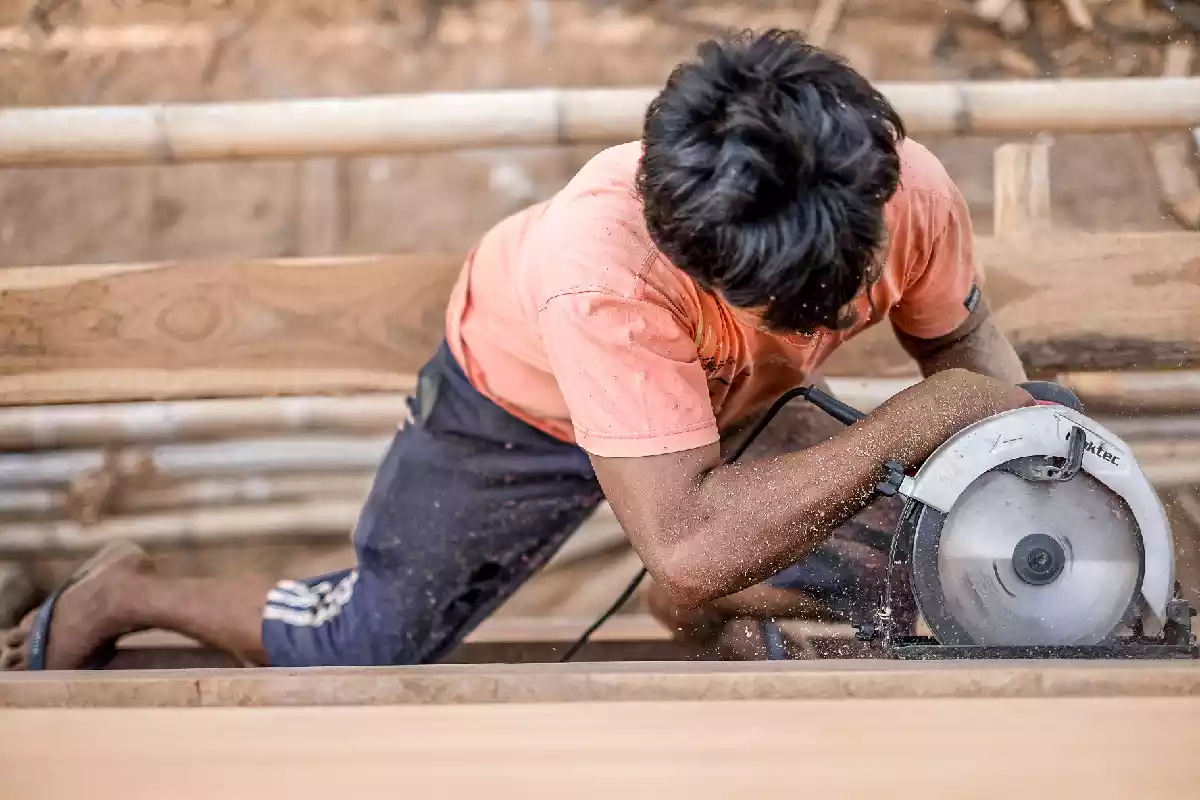
Steel construction runs at our Lamongan facility in East Java, a fabrication yard organized around plate work: covered assembly halls, CNC plasma cutting, rolling and forming equipment, and certified welders working to approved weld procedure specifications. Every plate arrives with a mill certificate matched to Bureau Veritas or RINA material rules, and every structural weld is logged on a hull weld map. Ultrasonic and visual inspection records accumulate through the build and join the owner’s technical file at handover — the document set that keeps the vessel insurable, financeable and saleable anywhere in the world.

Corrosion Protection, Engineered Once

Steel’s reputation for maintenance comes from yards that treat coatings as paint rather than engineering. We treat the coating system as a permanent installation: abrasive blasting to Sa 2.5 near-white metal, holding primer applied inside the climate window, stripe coats on every edge and weld, and a specified dry-film thickness verified by gauge — not by eye. Cathodic protection is calculated, not guessed, and the anode plan ships in the owner’s manual with a rotation schedule. Done this way, a steel yacht’s docking cycle is routine renewal, not recurring rescue.

Is Steel Right for Your Project?

Steel earns its place above 24 metres on range-first missions. If your program calls for speed, shallow draft and reef work in the 15–35 metre band, read our aluminium yacht builder page; for semi-custom cruising and charter economics under 30 metres, see fiberglass (FRP) construction. The full three-way trade-off is laid out in steel vs aluminium vs FRP, and owners arriving with their own naval-architect drawings can go straight to building from your own plans — steel kit designs are the most common we receive.

02 — Build stages and class hold points

A classed steel build is a sequence of verified stages

The surveyor attends at defined hold points, and work does not proceed past a hold point until it is signed.

A classed steel build is a sequence of verified stages
StageWhat HappensClass Involvement
Plate & material auditMill certificates verified against approved drawingsMaterial traceability check
Keel laying & framingBackbone and frames erected on the building berthAlignment and scantling survey
Hull platingShell plate cut, formed, fitted and weldedWeld inspection, ultrasonic testing
Blasting & coatingGrit blast to Sa 2.5, multi-coat epoxy system, anodesSurface preparation sign-off
Machinery & systemsEngines, tankage, piping and electrical installationSystems and safety survey
Launch & sea trialsInclining test, trials protocol, defect list closureFinal survey and certification

Measured from signed contract to handover, steel builds run 24–36 months depending on length and outfitting level. Budgets start around $2M for a straightforward expedition platform in the low-30-metre range and scale with size, machinery and interior specification toward the upper band of our $800k–$12M program range.

03 — Owner questions

Frequently Asked Questions

What sizes of steel yacht can be built in Indonesia?

Our steel program covers 24 to 60+ metres, with the strongest economics between 30 and 60 metres. Below 24 metres steel’s structural weight penalizes performance, and we will usually recommend aluminium or FRP instead.

Next step

Start Your Steel Build

Send us your mission profile — cruising grounds, range target, guest count, private or charter — and any drawings you already hold. We reply with a material verdict, a realistic budget band and a delivery timeline. WhatsApp +62 811-3941-4563 or email [email protected].

WhatsApp the Build Desk Contact