Our Methodology — How We Build Bespoke Phinisi Yachts

Our Build & Commissioning Methodology

The creation of a custom Phinisi is a journey that blends ancient tradition with meticulous project management. Our methodology is designed to be transparent, collaborative, and uncompromising in its pursuit of quality. It is a phased approach that honors the spirit of the Konjo craft while delivering a vessel that meets the highest contemporary standards of luxury, safety, and performance. This process is overseen at every stage by our expert team.

Phase 1: Conception & Architectural Design

Every great vessel begins with a vision—yours. This phase is an in-depth collaboration to translate your dreams into a viable architectural plan.

  • Initial Consultation: We explore your intended use, desired guest capacity, cruising destinations, aesthetic preferences, and budget.
  • Concept Development: Our naval architects create initial sketches, general arrangement (GA) plans, and 3D renderings to give you a tangible feel for the vessel.
  • Technical Specification: We define the core technical elements, including hull dimensions, engine selection, sail plan, and key onboard systems.
  • Material Palette: Our interior design team works with you to select the core materials, from the type of teak for the decking to the stone for the bathrooms and the fabrics for the upholstery.

Phase 2: Timber Sourcing & The Keel-Laying Ceremony

The soul of the yacht is its wood. We take extraordinary care in sourcing our primary materials.

  • SVLK-Certified Timber Selection: We procure Ulin (Ironwood) and Teak from government-approved sources, ensuring every log is accompanied by SVLK (Sistem Verifikasi Legalitas Kayu) documentation, guaranteeing its legality and sustainable origin.
  • Curing and Preparation: The timber is expertly seasoned to achieve the optimal moisture content, a critical step for ensuring the long-term stability and longevity of the hull.
  • Keel-Laying Ritual (Annyorong Lopi): Construction begins with a sacred Konjo ceremony. The keel is laid facing northeast, and offerings are made to bless the vessel and ensure a safe and successful build. This is a powerful moment that we encourage our clients to attend.

Phase 3: Traditional Hull Construction in Bira

This is where ancient craftsmanship comes to life on the shores of Bulukumba. The hull is built using techniques passed down through generations.

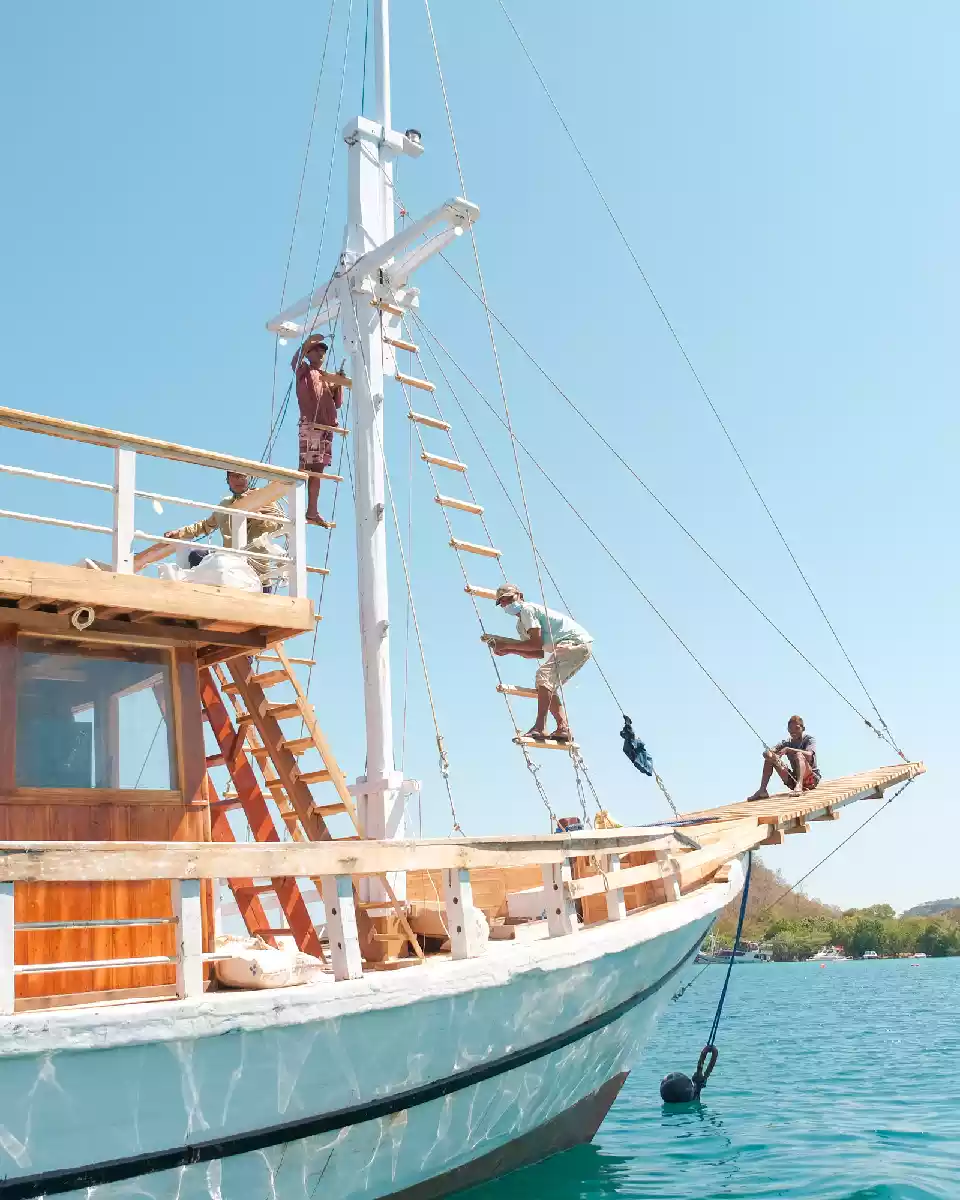
  • Frame & Planking: The master shipwrights construct the rib-like frames and then painstakingly fit the hull planks. This is done by eye, without blueprints, showcasing their incredible skill. Dowels, not nails, are often used in key structural joints.
  • Traditional Caulking: The seams between planks are made watertight using a traditional method involving bark from the gelam tree, a natural and highly effective sealant.
  • Superstructure Framing: Once the hull is complete, the foundational structure for the decks and cabins is erected.

Phase 4: Launch & Technical Outfitting

The launch of the hull is a massive community event and a major milestone. The vessel is then moved to a dedicated outfitting facility (often in Bali or Surabaya) for the installation of modern systems.

  • The Launch: The entire village helps to move the hull from the beach into the sea during a high tide, a spectacular ceremony of communal effort.
  • Systems Integration: Our engineers install the engines, generators, plumbing, electrical wiring, navigation suite (e.g., Garmin, Raymarine), air conditioning, and water makers.
  • Interior Finishing: Our artisans complete the interior, installing the custom cabinetry, flooring, lighting, and all the fine details that define a luxury space.

Phase 5: Sea Trials, Classification & Handover

The final phase is a rigorous process of testing and refinement to ensure perfection.

  • Sea Trials: The yacht is taken to sea for extensive testing of its stability, maneuverability, speed, and all onboard systems under real-world conditions.
  • Classification & Registration: We manage the entire process of registering the vessel and obtaining the necessary certifications from Indonesian authorities (like Biro Klasifikasi Indonesia – BKI) or international bodies (like RINA or Lloyd’s) if requested by the client.
  • Client Handover: We conduct a thorough orientation with you and your designated captain, ensuring you are completely familiar with your new vessel.

Our methodology is built on the principles of transparency and quality, as outlined in our Editorial Standards. To begin this incredible journey, please submit an inquiry on our commission page.


Continue exploring Indonesia Yacht Builder:
Our Indonesia Yacht Builder Service ·
Meet Our Team ·
Editorial Standards ·
Methodology ·
Sustainability ·
Safety & Compliance

Phase 2: Engineering refinement and material selection

Imagine the scent of freshly cut ironwood mingling with the sea breeze, a prelude to the majestic vessel taking shape before your eyes, a testament to centuries of maritime heritage. Once your vision has taken form in architectural sketches, our naval architects and engineers embark on the meticulous process of detailed engineering. This phase translates the aesthetic concept into a comprehensive set of technical drawings covering every aspect from structural integrity and hydrodynamics to mechanical, electrical, and plumbing systems. Each line and calculation is scrutinized to ensure your Phinisi will not only be breathtakingly beautiful but also exceptionally safe, efficient, and robust for navigating Indonesia’s diverse archipelagic waters.

Parallel to the engineering deep dive is the critical task of material sourcing. The soul of a Phinisi lies in its wood, and we uphold an uncompromising standard, selecting only the finest, sustainably harvested timbers. For the keel and primary frame, we often choose Ulin, the legendary Borneo ironwood, revered for its unparalleled density and natural resistance to rot and pests. For decking, interiors, and intricate joinery, the warm hues and durability of Javanese teak are preferred. Our long-standing relationships with ethical timber suppliers ensure not only the quality of the raw materials but also their responsible provenance, honoring the environment from which these magnificent resources are drawn.

Phase 3: The art of the build – from keel to hull

With detailed plans in hand and timbers carefully selected, the build commences in the traditional shipyards of South Sulawesi, often near the coastal villages like Tanah Beru, where the Konjo shipwrights have perfected their craft for generations. This phase is a symphony of ancient methods and contemporary precision. The keel, the very backbone of the vessel, is laid with a sense of reverence, followed by the careful shaping and fitting of the massive frames that will define the yacht’s silhouette. These highly skilled artisans, some of whom have learned their trade directly from their grandfathers, possess an intuitive understanding of wood, shaping each piece by hand to achieve perfect curves and seamless connections.

The planking of the hull is a painstaking process, where each timber plank is meticulously measured, shaped, and fitted. While modern Phinisi integrate advanced fasteners for enhanced safety and longevity, the primary hull structure often still honors the intricate, peg-and-groove joinery techniques passed down through generations, creating a vessel of remarkable strength and resilience. It is here that the physical manifestation of your yacht begins to emerge, a testament to the blend of traditional Konjo craftsmanship and our commitment to modern maritime engineering standards. A typical bespoke Phinisi build takes between 18 to 24 months, involving over 100 skilled artisans at various stages, a true community effort culminating in a masterpiece. Learn more about this fascinating maritime heritage on Wikipedia’s entry on Phinisi.

Phase 4: Crafting the interior sanctuary and final commissioning

Once the magnificent wooden hull stands complete, attention turns inward to transform the vessel into a luxurious floating sanctuary. This phase involves the meticulous fit-out of the interiors, where every cabin, lounge, and dining area is crafted to your precise specifications. From bespoke furnishings and hand-carved details to state-of-the-art entertainment systems and climate control, every element is designed for ultimate comfort and aesthetic appeal. Our design team works closely with you to select the finest finishes, fabrics, and materials, ensuring an ambiance that is both opulent and authentically Indonesian, creating a truly personalized haven at sea.

Concurrently, the complex network of modern yacht systems is expertly integrated. This includes the propulsion engines, generators, advanced navigation electronics, communication systems, water makers, and comprehensive safety equipment—all chosen for reliability and efficiency in remote cruising conditions. The rigging and sails, whether a traditional gaff or a modern Bermudan rig, are carefully selected and installed to ensure optimal performance. Finally, before handover, the Phinisi undergoes rigorous sea trials. This comprehensive testing ensures every system functions flawlessly, the vessel handles perfectly, and all safety protocols are met, often exceeding international maritime standards. The largest bespoke Phinisi yachts can span over 50 meters in length, offering unparalleled space and luxury for exploration across the Indonesian archipelago, from the vibrant coral reefs of Raja Ampat to the ancient Komodo dragon habitats. Discover more about the stunning region where these yachts are built and cruise at Indonesia.travel’s guide to South Sulawesi.