- Peak construction efficiency occurs during the dry months, minimizing weather-related delays.
- Material sourcing, especially for rare timbers like Ironwood and Teak, benefits from clear transport routes.
- Initial consultations and design finalization are ideally suited for the wet season, allowing for a seamless transition to construction.
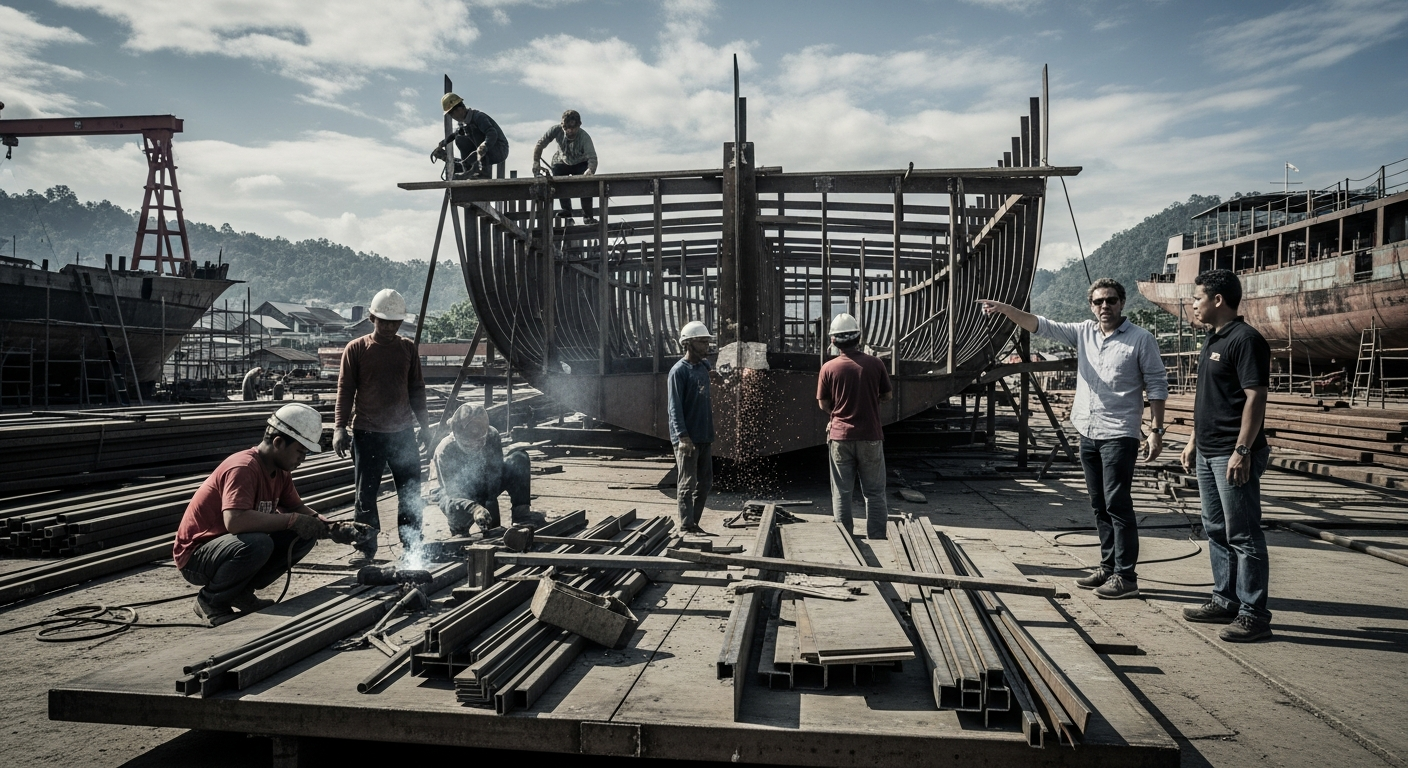
The scent of ironwood dust, sharp and resinous, permeates the air along the beaches of Bira. Here, in South Sulawesi, the rhythmic tap of hammers against timber and the hum of power tools orchestrate a symphony of craftsmanship. This is where the world’s most authentic phinisi yachts take form, where generations of Konjo boat builders transform raw materials into vessels of luxury. Understanding the archipelago’s seasonal rhythms is paramount for anyone considering a new build from an Indonesia yacht builder.
Navigating Indonesia’s Dual Seasons: The Climate Blueprint for Shipyards
Indonesia, a vast equatorial nation, operates on two primary seasonal cycles: the dry season and the wet season. These cycles, driven by the monsoon winds, dictate everything from daily life to the intricate schedule of a shipyard. The dry season typically extends from April to October, characterized by lower humidity, less rainfall, and calmer seas. Conversely, the wet season, from November to March, brings increased precipitation, higher humidity, and occasionally stronger winds and swells. For a custom yacht project, particularly one involving traditional timber construction, these climatic variations hold significant implications for material preparation, labor efficiency, and overall project timelines. Shipyards in Bira, Bulukumba, South Sulawesi, the traditional heartland of phinisi craftsmanship, are acutely aware of these patterns. The skilled artisans, whose techniques are recognized by UNESCO as Intangible Cultural Heritage since 2017, adapt their workflows to maximize productivity during favorable conditions. A typical luxury phinisi, ranging from 40 to 60 meters in length, represents an investment between $2 million and $12 million USD, with construction periods often spanning 24 to 36 months. Understanding these seasonal shifts allows for a more predictable and efficient build process, ultimately contributing to the 30-40% cost savings often realized compared to Western yards.
The Dry Season Advantage: Optimizing Construction from April to October
The period between April and October emerges as the prime window for active construction phases with an Indonesia yacht builder. During these months, the consistent dry weather provides ideal conditions for a multitude of critical tasks. Timber, especially the dense Ironwood (Ulin) sourced from Kalimantan or high-grade Teak from Java, benefits immensely from dry conditions for proper seasoning and processing. Reduced atmospheric moisture mitigates the risk of warping or fungal growth during the initial stages of hull construction. Outdoor work, which constitutes a significant portion of a yacht build—from framing and planking to sanding and painting—proceeds with minimal interruption. Logistics also run smoother. The transportation of large timber sections, steel plates, engines, and interior components from major ports like Makassar (approximately 200 kilometers from Bira) or Surabaya to the shipyards in Bira, Bali’s Tanjung Benoa, or Lamongan, East Java, becomes more reliable. Calmer seas facilitate the delivery of oversized cargo, and drier roads prevent delays. For a project commencing in April, the initial hull shaping, a labor-intensive process, can progress without the constant threat of rain, ensuring consistent workflow for the hundreds of craftsmen involved. This stability is crucial for maintaining the rigorous schedule required for a sophisticated liveaboard or charter vessel. A client commissioning a custom yacht with a budget upwards of $800,000 USD expects precision and adherence to timelines, and the dry season provides the most conducive environment for an Indonesia yacht builder to deliver on these expectations.
Wet Season Strategy: Design, Procurement, and Foundation from November to March
While active, large-scale outdoor construction slows during the wet season (November to March), this period is far from dormant for an Indonesia yacht builder. Instead, it transforms into a strategic phase for critical preparatory work. This is the ideal time for clients to engage in in-depth design consultations, finalize naval architecture plans, and make detailed interior material selections. With less pressure on direct production, the design teams and project managers can dedicate focused attention to client specifications, ensuring every detail, from the layout of guest cabins to the integration of advanced navigation systems, aligns with the owner’s vision. Procurement also takes center stage. Sourcing specialized equipment, such as marine engines from European manufacturers, sophisticated galley appliances, and bespoke interior finishes, often involves lead times of several months. Initiating these orders during the wet season ensures that components arrive at the shipyard precisely when needed for installation during the subsequent dry season. Furthermore, the wet season can be used for foundational shipyard tasks that are less weather-dependent. This includes the preparation of steel frames for steel-hull liveaboards, the initial cutting and shaping of rough timber in covered workshops, and the meticulous planning of the next construction phase. For a charter operator planning to expand their fleet, utilizing the wet season for design and procurement can significantly shorten the overall delivery schedule, making the vessel ready for its maiden voyages in time for the peak tourist season. This strategic approach minimizes downtime and leverages the full capacity of the Indonesia yacht builder’s operations, ensuring efficient progress even when the skies open.
Regional Nuances: Bira, Bali, and Lamongan Shipyard Climates
The Indonesian archipelago’s sheer scale means that seasonal patterns can exhibit regional variations, impacting specific shipyard operations. Bira, in Bulukumba, South Sulawesi, the epicenter of phinisi construction, experiences its peak rainfall typically from December through February. This period necessitates a shift towards indoor work, timber drying in sheltered areas, and meticulous planning for the following dry season. The traditional Konjo builders, with centuries of inherited knowledge, are adept at managing these conditions, often using natural ventilation and elevated platforms to protect materials. Further west, in Bali, particularly around Tanjung Benoa, the wet season can be less intense and shorter, often starting later in November and subsiding by March. Bali’s more developed infrastructure also means less disruption to material transport, though heavy rainfall can still affect exterior finishes. Shipyards in Bali often specialize in a mix of traditional and modern builds, from smaller luxury tenders to larger composite or steel-hulled yachts, and their operations are geared towards year-round activity, albeit with seasonal adjustments. On the north coast of East Java, Lamongan presents a different scenario. As a more industrialized shipbuilding hub, its yards often focus on steel-hull liveaboards and commercial vessels. While still subject to the wet season, their larger covered facilities and mechanized processes can mitigate some of the weather’s impact on construction timelines. However, the movement of large steel plates and components from Surabaya remains susceptible to road conditions during heavy rains. Understanding these regional distinctions allows clients and brokers to align their project timelines with the specific capabilities and climatic conditions of their chosen Indonesia yacht builder. Indonesia’s climate varies, but these general patterns guide shipyard operations.
The Holistic Project Timeline: Beyond a Single Season
Commissioning a custom luxury yacht from an Indonesia yacht builder is a multi-year endeavor, extending well beyond the confines of a single dry or wet season. A typical project, from initial concept to sea trials, can span 18 to 36 months, depending on the vessel’s size, complexity, and customization level. The process begins with conceptual design and naval architecture, often requiring several months of collaborative work between the client, designers, and the shipyard’s engineering team. This phase can comfortably occur during any season, but initiating it in the wet season provides ample time for thorough refinement before the physical build commences. Following design approval, the procurement phase involves sourcing high-quality materials—Ironwood (Ulin) for the keel and frames, Teak for decking and interiors, and marine-grade steel for modern hulls—along with engines, generators, navigation electronics, and interior fittings. This global procurement process is managed to ensure components arrive in sequence, aligning with the construction schedule. The actual construction then unfolds across multiple seasons, with major milestones such as hull completion, engine installation, superstructure erection, interior fit-out, and exterior finishing. Each stage has specific environmental requirements. For example, applying protective coatings and exterior paint demands dry, low-humidity conditions. Final commissioning and sea trials, essential for securing certifications from bodies like RINA or Lloyd’s Register, are also best conducted in calmer seas, typically during the dry season. The sustained effort of an Indonesia yacht builder over this extended period, integrating traditional craftsmanship with modern engineering, results in a vessel of authenticity and quality.
Strategic Commissioning: Maximizing Value and Efficiency with an Indonesia Yacht Builder
For discerning yacht buyers, charter operators, and family offices looking to invest in a luxury liveaboard or charter vessel, the timing of engagement with an Indonesia yacht builder holds strategic importance. While a build cycle spans multiple seasons, initiating the conversation and formalizing the commission during the dry season (April to October) allows for an immediate transition into the design and procurement phases with clear weather ahead. Alternatively, using the wet season (November to March) for initial discussions, site visits to yards in Bira or Tanjung Benoa, and design finalization, positions a project perfectly to break ground with the return of the dry season. This forward planning ensures that the most weather-sensitive construction stages, such as hull shaping, exterior painting, and major timber work, benefit from optimal conditions. By aligning your project’s commencement with the natural rhythms of the archipelago, you leverage the inherent efficiencies of the local shipyards and their experienced Bugis and Konjo craftsmen. This thoughtful approach not only helps maintain project timelines but also contributes to the overall value proposition, ensuring that your investment of $800,000 to $12 million USD yields a vessel built under the most favorable conditions. Engage with an Indonesia yacht builder at the right time to capitalize on the region’s craftsmanship and cost-effectiveness. Indonesia.travel offers insights into the wider context of the nation’s appeal.
The decision to build a custom yacht is significant. Understanding the seasonality of operations with an Indonesia yacht builder allows for informed choices that optimize timelines, material quality, and overall project success. Whether you envision a classic phinisi or a modern steel-hull liveaboard, timing your engagement with the rhythm of the Indonesian climate ensures your vessel is crafted under the best possible conditions. Explore the possibilities for your next luxury yacht by visiting our homepage and connecting with our team. We guide you through every step, from concept to launch, ensuring your vision becomes a reality. Discover more about our shipyard capabilities and past projects on our indonesiayachtbuilder.com homepage, or learn about our custom build process at /custom-yacht-build-process/.